

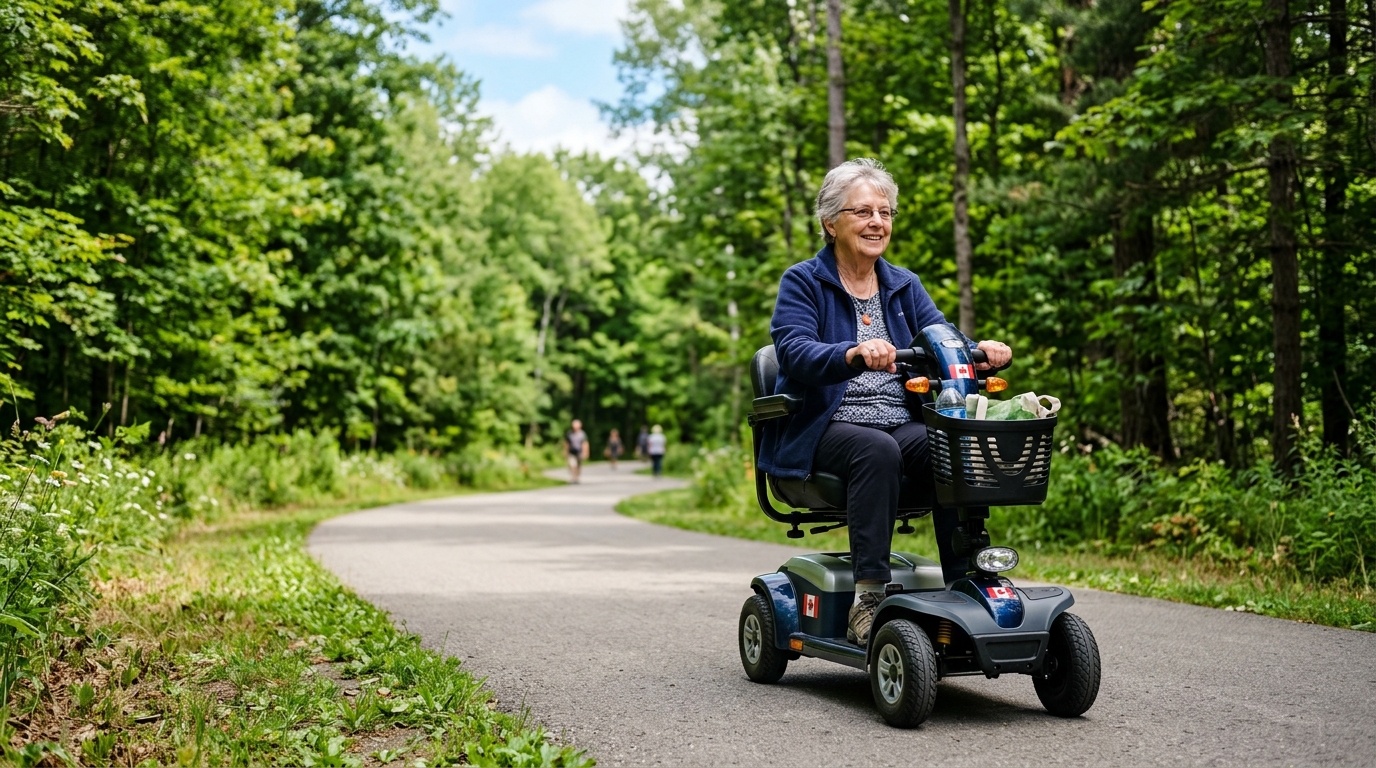
Independence matters. For over 108,550 Canadians who use a mobility scooter every day (PMC/Statistics Canada, 2016), the right scooter isn't just a convenience. It's freedom. Whether you're navigating a grocery store, enjoying a park trail, or boarding a flight, choosing the correct model changes everything.
This guide covers every scooter type, the specs that matter most, real Canadian pricing, and how Ontario's ADP program can cover up to 75% of your cost. No filler. Just the information you need to buy with confidence.
- Over 108,550 Canadians use mobility scooters daily (PMC, 2016). The market is growing fast.
- 3-wheel scooters suit indoor and tight-space use; 4-wheel models provide outdoor stability.
- Ontario ADP covers 75% of approved device costs — ODSP recipients may qualify for 100%.
- Canadian prices range from $2,500 CAD (entry-level) to over $11,000 CAD (premium all-terrain).
- Factory Direct Medical offers free shipping Canada-wide on all scooter models.
What Is a Mobility Scooter?
The global mobility scooter market reached USD $3,262.8 million in 2025 (Cognitive Market Research, 2025), and it's not hard to see why. A mobility scooter is a battery-powered personal vehicle designed for people with limited walking ability, chronic fatigue conditions, or mobility impairments. It differs from a power wheelchair in one important way: the rider sits upright in a seat and steers using a tiller handlebar, rather than operating joystick controls from a reclined position.
Most scooters consist of five core components:
- Battery pack: usually lithium-ion or sealed lead-acid, rechargeable at any standard outlet
- Electric motor: drives the rear or front wheels
- Tiller: the handlebar assembly controlling speed and direction
- Platform: a flat footrest for both feet
- Seat: swiveling, often padded, with adjustable armrests
Scooters aren't just for seniors. They serve anyone who needs to conserve energy over distances, including people with MS, COPD, cardiac conditions, or post-surgical recovery needs. North America holds 44% of the global scooter market (Fortune Business Insights, 2025), which reflects how deeply mobility aids are woven into everyday Canadian life.
Types of Mobility Scooters: Which Is Right for You?
Choosing the wrong scooter type is the most common — and costly — mistake Canadian buyers make. Four distinct categories serve different lifestyles, and matching the right type to how and where you'll use it determines whether a scooter becomes an asset or a frustration.
3-Wheel Mobility Scooters
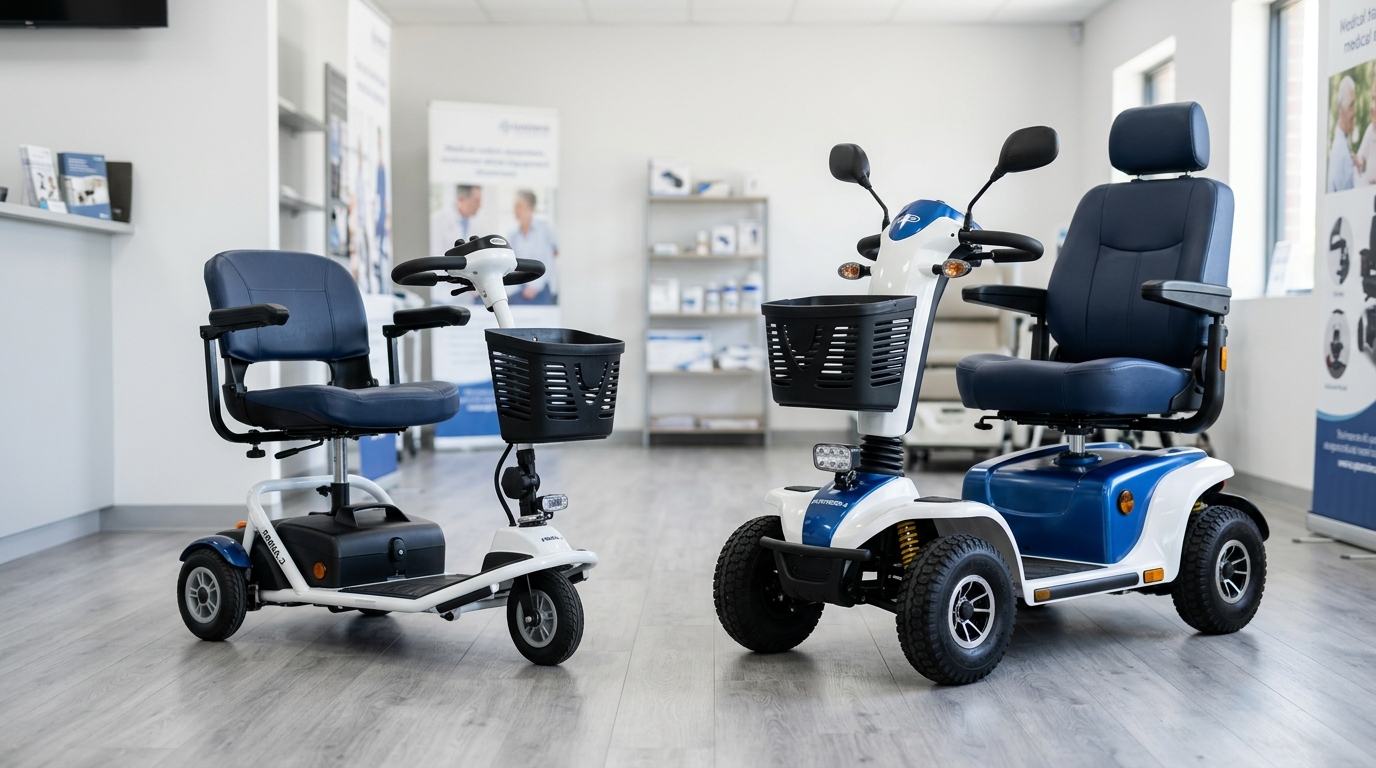
Three-wheel scooters have a single front wheel and two rear wheels. That design produces a tighter turning radius, making them ideal for apartment hallways, grocery store aisles, and medical offices. They're generally lighter than 4-wheel models, which makes transport easier.
The trade-off is stability. On uneven outdoor surfaces, three-wheelers require more care. They're not the right choice for gravel paths, sloped driveways, or off-pavement travel.
Best for: Indoor use, urban apartments, clinic visits, everyday errands in tight spaces.
4-Wheel Mobility Scooters
Four-wheel scooters add a second front wheel, widening the base and dramatically improving outdoor stability. They handle grass, mild slopes, and uneven pavement far better than three-wheel alternatives. Weight capacity on 4-wheel models typically reaches 300 lbs (136 kg) or more.
The wider footprint means a larger turning circle. In small rooms or narrow hallways, they can be awkward to maneuver.
Best for: Outdoor use, suburban neighbourhoods, parks, uneven terrain, heavier riders.
Folding and Travel Scooters
Folding travel scooters collapse into a compact form for transport. Most weigh between 20–35 kg and fit in the trunk of a standard car or airline cargo hold. Battery range on these models typically spans 15–25 km per charge, enough for a full day of light-to-moderate use.
If you travel frequently or lack garage storage, a folding scooter is worth the premium. See our best folding travel mobility scooters guide for detailed comparisons of current models.
Best for: Frequent travellers, condo residents, anyone who transports the scooter regularly.
Heavy-Duty and All-Terrain Scooters
Heavy-duty scooters are built for users who need higher weight capacity (up to 500 lbs), longer range, or off-road capability. They feature larger batteries, wider seats, and more powerful motors. These models are less portable but significantly more capable.
Best for: Rural users, larger individuals, anyone needing full-day outdoor range.
Key Features to Look For When Buying a Mobility Scooter
Battery range is the single most important specification for Canadian buyers. Most daily routines require 15–25 km per charge, covering grocery runs, medical appointments, and neighbourhood outings. Falling short of that range means returning home earlier than planned or waiting for a charge mid-day.
Beyond battery range, here are the features that separate a great scooter from a frustrating one:
Weight Capacity
Always choose a scooter rated at least 20–25% above your body weight. This extends motor and battery life and prevents premature wear. Standard models handle 113–136 kg (250–300 lbs); heavy-duty models reach 227 kg (500 lbs).
Turning Radius
Measured in centimetres, this tells you the tightest circle the scooter can navigate. Smaller is better for indoor use. A 3-wheel scooter might turn in 90–100 cm; a 4-wheel model may need 130–160 cm.
Seat Comfort and Adjustability
You'll spend hours in this seat. Look for padded cushioning, swiveling capability for easier transfers, and adjustable armrest height. Some models include suspension for outdoor comfort.
Disassembly and Portability
If you need to lift the scooter into a vehicle, check the heaviest single piece weight. Many scooters separate into 4–5 sections for transport, with individual pieces weighing 12–20 kg.
Terrain Compatibility
Larger, pneumatic (air-filled) tires handle rough surfaces better than solid foam tires. If you live in an area with gravel paths or mild slopes, tire type matters more than most buyers expect.
How Much Does a Mobility Scooter Cost in Canada?
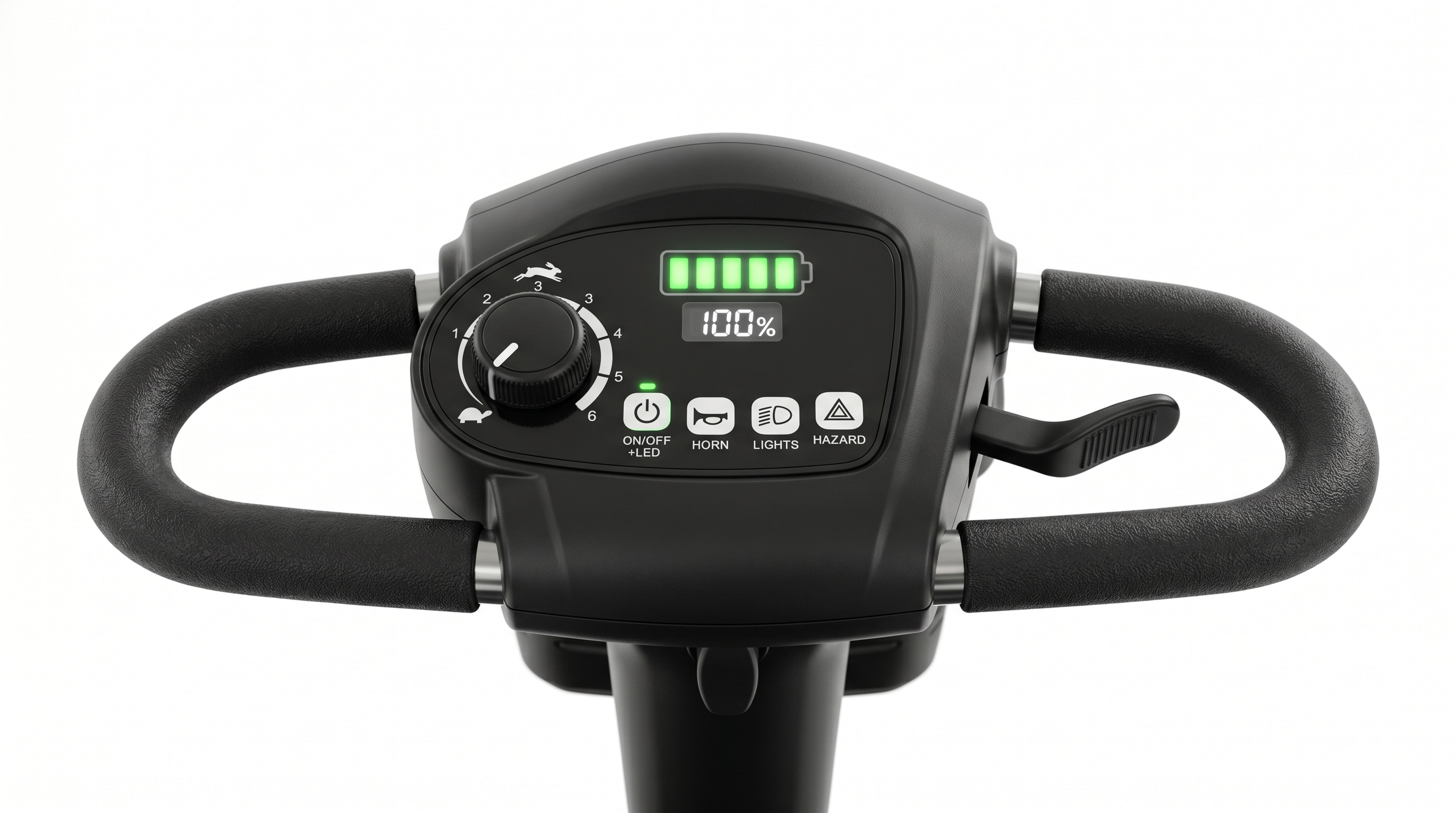
Canadian mobility scooter prices start at $2,500 CAD for entry-level urban models and climb to $11,849 CAD for fully enclosed all-weather electric vehicles. The price tiers reflect real differences in capability, battery technology, and weight capacity — not just branding.
$2,500–$3,000 CAD: Entry-Level
These scooters cover basic indoor and light outdoor use. They're compact, easy to transport, and adequate for short daily trips. Expect solid-tire models with lead-acid batteries and moderate weight limits.
- The Heartway Zen ($2,600 CAD) is a compact urban scooter designed for daily neighbourhood errands.
- The Compact 4-Wheel Red Scooter ($2,500 CAD) offers four-wheel stability at the lowest price point in the Ezee Life lineup.
$3,000–$4,500 CAD: Mid-Range
Mid-range scooters add lithium batteries, better range, higher weight capacity, and improved seat comfort. Most folding travel scooters fall here.
The Ezee Elite Portable Scooter ($2,995 CAD) features single front-wheel drive and is available in Blue, Black, Gray, and Red. It's our top choice for condo residents who need to store the scooter in a small space.
For buyers who want dual front-wheel stability without moving to a full 4-wheel design, the Ezee Classic Portable Scooter ($3,595 CAD) hits a useful middle ground. It offers more outdoor grip than the Elite while remaining manageable in building elevators and hallways.
The Matrix Lite ($3,199.99 CAD) earns its place through automatic folding: press a button, the scooter folds itself. That convenience matters when you're loading up at a trailhead or exiting a parking garage.
$4,000–$6,000 CAD: Premium
| Model | Price (CAD) | Key Advantage |
|---|---|---|
| ATTO Mobility Scooter | $4,199.99 | Splits into 2 sections; airline-friendly |
| ATTO Sport | $5,699.00 | Performance upgrade of the ATTO |
| Rover 4 by Ezee Life | $4,995.00 | Lithium batteries + full charger included |
| Matrix Swift | $3,699.99 | Water and dust protection; multi-colour |
The ATTO Mobility Scooter is the standout in this tier. Made by Moving Life, it splits into two pieces weighing under 14 kg each. That makes it genuinely car-trunk portable without a ramp or lift.
$9,500–$12,000+ CAD: Heavy-Duty and All-Terrain
The Heartway Monster X ($9,500 CAD) delivers serious off-road performance for users who demand power over long distances. The Matrix Nexa Electric Compact City Car ($11,849.99 CAD) is in a category of its own: it's a fully enclosed electric mobility vehicle for all-weather outdoor travel.
Browse the full selection at Factory Direct Medical's mobility scooter collection, where all models ship free across Canada.
Ontario ADP Funding: How to Reduce Your Out-of-Pocket Cost
Ontario's Assistive Devices Program (ADP) covers 75% of the approved cost of mobility scooters for eligible residents (ontario.ca, 2025). That's not a small discount. On a $4,000 scooter, ADP reduces your share to $1,000. Ontario Disability Support Program (ODSP) recipients may qualify for 100% coverage, leaving no out-of-pocket cost at all (ontario.ca, 2025).
To qualify, you must:
- Be an Ontario resident covered by OHIP
- Have a medical need confirmed by a registered occupational therapist or physiotherapist
- Require the device daily for basic purposeful mobility, both indoors and outdoors
- Have a long-term need exceeding 6 months
The process works like this: your OT or PT completes an assessment, helps fill out the ADP application form, and connects you with an ADP-registered vendor (Factory Direct Medical is ADP-registered). The vendor submits the form electronically. Approval typically takes 4–6 weeks.
One important note: ADP covers devices deemed medically necessary. Recreational-only use doesn't qualify. If you use the scooter for daily errands, medical appointments, and home mobility, you'll almost certainly meet the standard. Ask your family doctor or specialist for a referral to an ADP-authorized OT if you don't already have one.
Top Mobility Scooters Available in Canada
Factory Direct Medical has distributed mobility scooters to 50,000+ Canadian customers since 1994. These are the models our mobility specialists recommend most often, based on real-world customer feedback and our in-person assessments at our Concord, Ontario showroom.
Best Travel Scooter: ATTO Mobility Scooter by Moving Life
$4,199.99 CAD
The ATTO sets the standard for foldable travel scooters in Canada. It disassembles into two pieces in seconds, each under 14 kg, making it manageable for one person to load into a car trunk. The tiller folds flat for airline check-in. Battery charges from any standard outlet. It's the scooter we recommend when customers say "I want to keep travelling."
Best Budget Pick: Heartway Zen
$2,600 CAD
Compact. Manoeuvrable. Affordable. The Zen is designed for urban environments where tight turns and small elevators are everyday challenges. It won't win any distance competitions, but for daily neighbourhood use and grocery trips, it delivers everything most users need at the lowest price point we offer.
Best All-Rounder: Ezee Classic Portable Scooter
$3,595 CAD
- Dual front-wheel drive for better outdoor grip than single-wheel alternatives
- Available in multiple colours
- Portable without sacrificing the stability of a full 4-wheel design
- Ideal for users splitting time between indoor appointments and outdoor paths
Best Heavy-Duty: Heartway Monster X
$9,500 CAD
For users who need serious outdoor range and higher weight capacity, the Monster X is in a class of its own. It handles terrain that would stop a travel scooter cold. It's not a condo scooter; it's a tool for rural Canadians who want to maintain an active outdoor lifestyle.
All models include free Canada-wide shipping. Browse the full mobility scooter collection to compare specs side by side.
How to Choose the Right Scooter for Your Lifestyle
Start with where you'll use the scooter 80% of the time. That single answer determines whether you need a 3-wheel or 4-wheel base, folding capability, or heavy-duty construction.
Ask yourself these five questions:
1. Where will I use it most?
Primarily indoors (3-wheel or compact 4-wheel). Primarily outdoors (full 4-wheel or heavy-duty). Split 50/50 (mid-range 4-wheel or dual-drive portable).
2. Will I transport it in a car?
Yes, frequently: choose a folding model under 25 kg. Occasionally: a disassembling model works. Rarely: full-size offers maximum comfort.
3. What's my weight?
Always select a model rated at least 20% above your body weight for longevity.
4. How far do I travel in a day?
Under 15 km: entry-level battery is fine. 15–25 km: mid-range lithium is ideal. Over 25 km: heavy-duty or dual-battery models only.
5. What's my budget, and am I ADP-eligible?
If you're an Ontario resident with a qualifying condition, calculate your actual out-of-pocket cost at 25% of the approved amount before setting your budget ceiling.
Our mobility specialists in Concord, Ontario offer free in-person consultations and product trials. You can also call us anytime for remote guidance on matching a scooter to your specific needs.
Ready to Find Your Mobility Scooter?
Browse 12+ models from Moving Life, Ezee Life, Matrix, and Heartway — all with free Canada-wide shipping.
Shop Mobility ScootersFrequently Asked Questions
Does provincial insurance or ADP cover mobility scooters in Canada?
Ontario's Assistive Devices Program covers 75% of approved mobility scooter costs for eligible Ontario residents (ontario.ca, 2025). ODSP recipients may qualify for 100% coverage. Other provinces have similar programs, though funding amounts and eligibility criteria vary. Private insurance plans sometimes cover the remaining 25%. Check with your insurer before purchasing.
Can I take a mobility scooter on an airplane?
Most airlines accept mobility scooters as checked mobility aids at no extra charge, provided the battery meets airline safety standards. Lithium-ion batteries under 300 Wh are generally accepted. Sealed lead-acid batteries may require approval. Always contact your airline at least 48 hours before departure. Folding models like the ATTO are specifically designed for airline travel.
What is the difference between a mobility scooter and a power wheelchair?
A mobility scooter uses a tiller handlebar for steering and requires the user to sit upright with feet on a platform. A power wheelchair uses a joystick, accommodates reclined seating positions, and can support users with more complex postural needs. Scooters are generally less expensive; power wheelchairs are prescribed for users with upper body weakness or positioning requirements. Your OT can help determine which fits your clinical profile.
How long does a mobility scooter battery last?
Battery lifespan depends on type and usage. Lithium-ion batteries typically last 3–5 years with regular charging. Lead-acid batteries last 1–3 years. Both types should be charged after each use — don't let them fully deplete. Range per charge spans 15–25 km for most portable models and up to 40+ km for heavy-duty scooters.
Do I need a prescription for a mobility scooter in Canada?
You don't need a prescription for private purchase. However, for ADP funding in Ontario, you need an assessment by an ADP-authorized occupational therapist or physiotherapist, who confirms medical necessity. Your family doctor can provide a referral to an OT. Factory Direct Medical's team can guide you through the documentation process.
What is the weight limit on most mobility scooters?
Standard scooters support 113–136 kg (250–300 lbs). Mid-range to premium models often accommodate up to 160 kg (350 lbs). Heavy-duty models like the Heartway Monster X are built for users up to 227 kg (500 lbs). Always verify the rated capacity of your chosen model before purchase, and choose one rated above your current weight.
Conclusion
Choosing a mobility scooter is a meaningful decision. The right model extends your range, restores independence, and fits your budget when you factor in available funding. For most Canadians, that means matching the scooter type to primary use case (indoor vs. outdoor), shortlisting models within your budget tier, and applying for ADP funding before making a final purchase.
Factory Direct Medical has helped over 50,000 Canadians find the right mobility solution since 1994. Our team knows the ADP process inside and out, and we carry models from Moving Life, Ezee Life, Matrix, and Heartway, covering every use case and budget.
Ready to find your scooter? Browse our full mobility scooter collection with free shipping Canada-wide, or call us to book an in-person trial at our Concord, Ontario showroom.


