

How to Choose a Raised Toilet Seat: The Complete Guide for Seniors
By Factory Direct Medical Expert Team
Published May 13, 2026 | Updated May 13, 2026
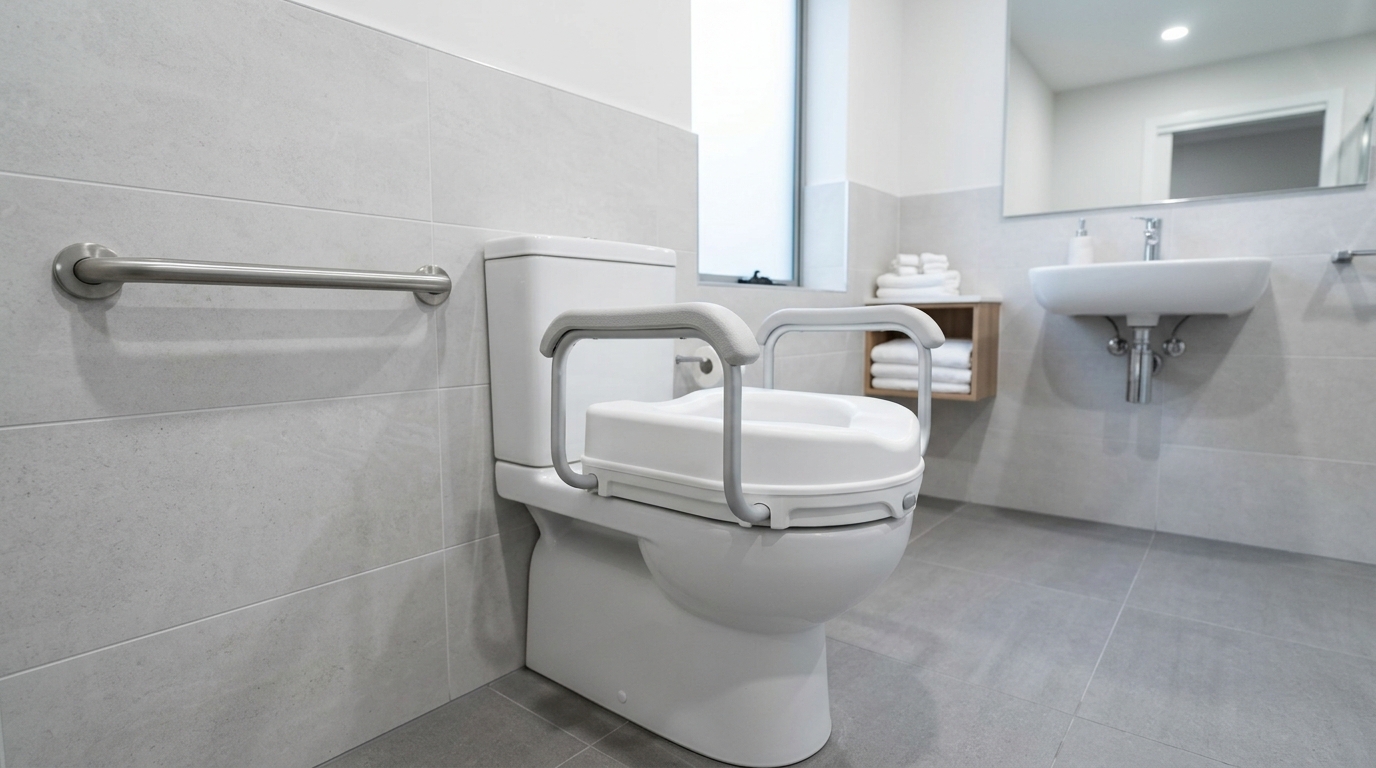
Every year, nearly 235,000 people in the United States visit emergency rooms because of bathroom injuries (CDC, 2010). In Canada, falls account for 85% of all seniors' injury-related hospitalizations (Public Health Agency of Canada). And here's the part most bathroom safety guides miss: between 19% and 37% of those injuries happen not in the shower, but during toilet transfers — the simple act of sitting down or standing up.
A raised toilet seat is the most direct, lowest-cost intervention for that specific risk. It adds 2 to 5 inches of height to your existing toilet bowl, reducing the distance your joints must travel and cutting the muscular effort required to rise. For someone managing arthritis, a hip replacement recovery, or general age-related strength loss, those inches matter enormously.
This guide covers everything you need to make a confident choice: the four main types of raised toilet seats, how to measure for the right height, top models available at Factory Direct Medical, step-by-step installation, and what provincial funding programs may help cover the cost.
Key Takeaways
- Between 19–37% of senior bathroom injuries occur specifically during toilet transfers, not in the shower (CDC MMWR, 2010)
- Standard toilets sit 15–17 inches high; most seniors need 19–21 inches for safe, strain-free transfers
- Four main types exist: bolt-on, clamp-on/locking, hinged, and padded — each suited to different needs
- Factory Direct Medical carries the MOBB Hinged Raised Toilet Seat ($70 CAD) and the Ezee Life CH2019 Dual-Lock ($40 CAD)
- Provincial DME programs (Ontario ADP, BC PharmaCare, Alberta AADL) may partially fund raised toilet seats
Why Your Standard Toilet Height Is a Fall Hazard
Between 19% and 37% of older adults' bathroom injuries occur while sitting down, standing up, or using the toilet (CDC MMWR, 2010). That statistic surprises most people, who assume the shower is the main danger zone. The toilet transfer, however, demands a deep squat from a standing position, and then a controlled push back up, every single time. For adults with reduced lower-body strength, that repeated movement is where falls happen.
Standard residential toilets sit between 15 and 17 inches from floor to seat rim. Occupational therapy guidelines and post-surgical protocols generally recommend a seat height of 19 to 21 inches for seniors and anyone recovering from a hip or knee replacement. That gap of 2 to 6 inches is exactly what a raised toilet seat closes.
Canada's population of adults aged 65 and older reached approximately 8.1 million as of 2025 (Statistics Canada). Among community-dwelling seniors, 20 to 30% experience at least one fall each year (Public Health Agency of Canada). The physical and financial toll is staggering: falls killed 7,621 Canadians aged 65 and older in 2022, a 51% increase from 2017 (Statistics Canada).
A raised toilet seat won't eliminate all bathroom fall risk. It works best as part of a broader safety plan that includes grab bars and non-slip mats. But for the specific hazard of toilet transfers, it's the most targeted tool available, and it costs far less than a single emergency room visit.
Types of Raised Toilet Seats Explained
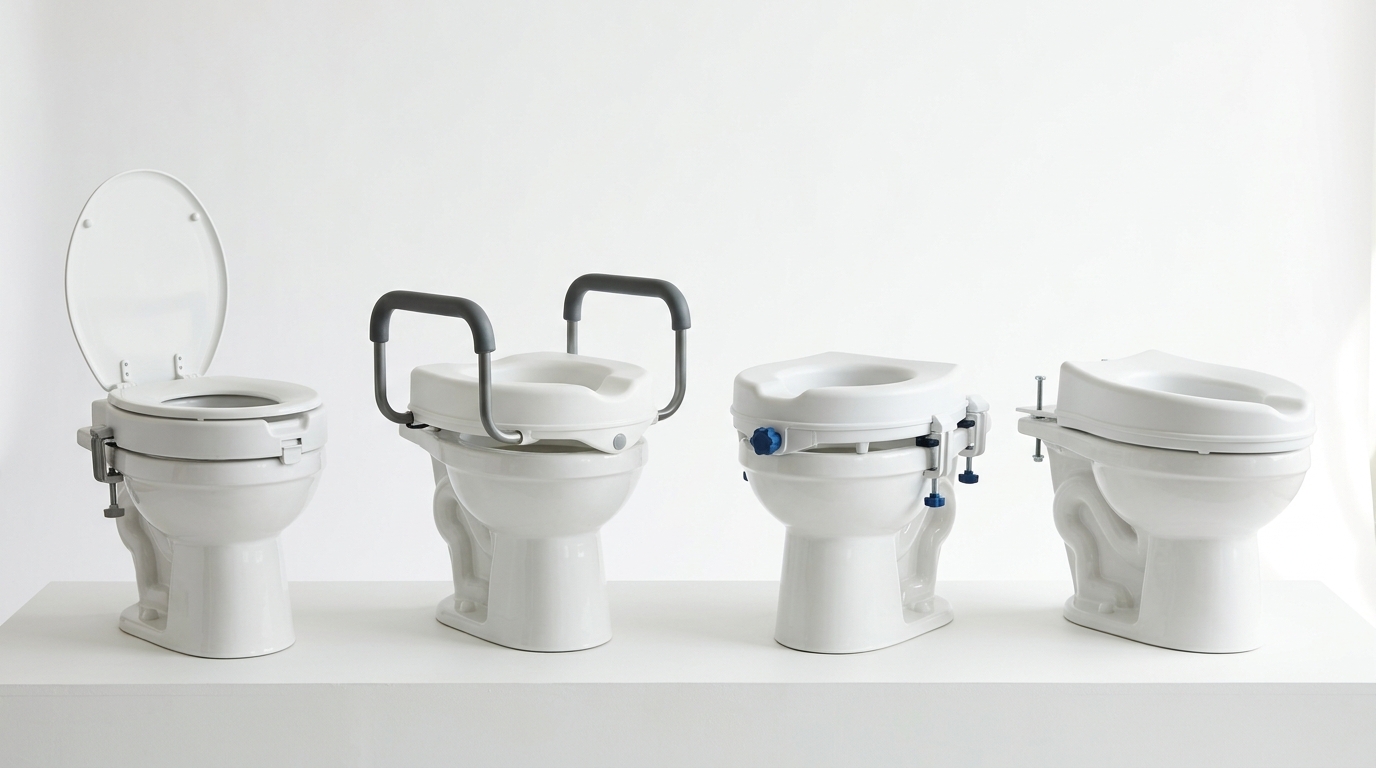
There are four main categories of raised toilet seats, and choosing the wrong type is the most common mistake buyers make. Each design balances height, stability, hygiene access, and compatibility differently.
1. Bolt-On Raised Toilet Seats
These attach directly to the toilet bowl's existing bolt holes, replacing your current seat. They're the most stable option because they're mechanically fastened rather than friction-fitted. The tradeoff is that installation requires removing the old seat, and they're not as quick to remove for cleaning. Best for: permanent installations where maximum stability is the priority.
2. Clamp-On / Locking Raised Toilet Seats
Clamp-on seats grip the toilet bowl rim using adjustable thumb screws or a locking lever mechanism. They don't require tools to install or remove, and most can be detached in seconds for cleaning. The locking mechanism is critical: a seat with dual locks front and back distributes your weight more evenly and prevents rocking. Best for: users who need a removable option or share the toilet with household members who don't use the riser.
3. Hinged Raised Toilet Seats
A hinged raised toilet seat keeps the raised surface permanently installed but adds a lid and seat that hinge open, giving full access to the bowl for cleaning. You get the permanence of a bolt-on design with the hygiene convenience of easy bowl access. Best for: users who want a cleaner bathroom aesthetic and simpler long-term maintenance.
4. Padded Raised Toilet Seats
Foam or gel padding on the seat surface provides comfort for users who spend extended time on the toilet, experience pressure sores, or have sensitivities from certain medical conditions. Padded seats are available in both bolt-on and clamp-on configurations. Best for: palliative care, users with chronic conditions, or post-surgical recovery requiring extended bathroom time.
Compatibility note: Always verify whether a model fits round or elongated toilet bowls. Elongated bowls are roughly 2 inches longer than round bowls. Many raised toilet seats come in both versions; some universal models fit both. Check your bowl shape before ordering.
Top Raised Toilet Seats at Factory Direct Medical
Factory Direct Medical carries two elevated toilet seat models that cover the majority of buyer needs: one optimized for cleaning ease, and one for budget-conscious buyers seeking a secure, reliable fit.
MOBB 2" Hinged Raised Toilet Seat — $70 CAD
The MOBB Hinged Raised Toilet Seat is built for households where the toilet is shared and cleaning frequency matters. Its hinged design means you lift the riser lid like a regular toilet seat lid, exposing the bowl for normal cleaning without removing the entire unit.
- Height added: 2 inches
- Weight capacity: 300 lbs
- Fit: Available in both elongated and regular (round) versions
- Installation: Hardware-included; mounts over existing seat and lid
- Current price: $70 CAD (regularly $100–$105 CAD — 30% off)
- Vendor: MOBB Healthcare
The hinged mechanism solves the single biggest frustration with raised toilet seats: keeping the toilet clean without a daily removal routine. The 300-lb capacity handles most users without issue, and availability in both bowl shapes removes a common compatibility headache.
Ezee Life CH2019 2" Raised Toilet Seat, Dual Locks — $40 CAD
The Ezee Life CH2019 takes a different approach. At $40 CAD, it's the entry point for seniors who need a medically effective solution at a lower price point. Two thumb screws on the rear sides clamp the seat firmly to the bowl rim, creating a stable surface that doesn't shift under load.
The design philosophy here is direct: "the goal is to effectively modify height of the toilet seat to a height where the user can reach the seat before they get low enough to become unstable on their feet." That's a clinical description of what raised toilet seats actually do.
The CH2019 pairs particularly well with a Versa frame, which adds freestanding arms on both sides of the toilet. If you need both height and lateral support for pushing yourself upright, that combination addresses both needs without committing to a full commode chair. The lightweight plastic construction keeps the seat easy to remove and wipe down.
Which should you choose? If cleaning convenience is your priority and the budget allows, the MOBB hinged model is worth the extra $30. If you need a quick-fit, removable solution at the lowest cost, the Ezee Life CH2019 delivers genuine safety value without overcomplicating the decision.
How to Measure for the Right Raised Toilet Seat Height
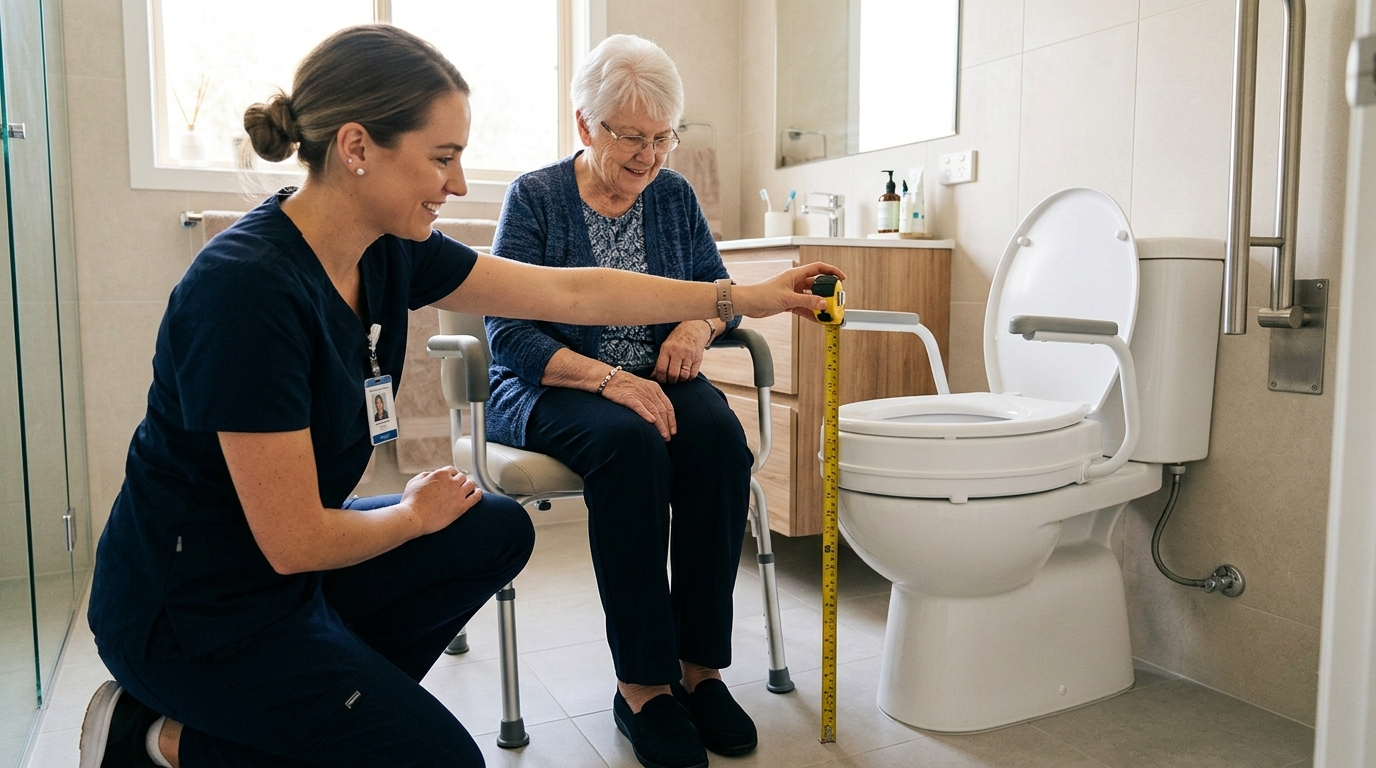
The right raised toilet seat height is the one that equals your knee height when seated in a chair, measured from floor to the back of the knee. This is the standard occupational therapy benchmark, and it produces a toilet seat height that allows you to push up from a near-neutral hip angle rather than from a deep squat.
- Measure your knee height. Sit in a straight-backed chair with your feet flat on the floor. Have someone measure from the floor to the crease at the back of your knee. Record this number. For most adults, it falls between 16 and 22 inches.
- Measure your current toilet height. With the seat down, measure from the floor to the top of the toilet seat. Standard residential toilets sit between 15 and 17 inches. "Comfort height" or ADA toilets sit between 17 and 19 inches.
- Calculate the riser height you need. Subtract your toilet height from your knee height. The result is the minimum height your raised toilet seat should add.
Example: Knee height 20 inches, current toilet 16 inches = need at least a 4-inch riser.
Common riser heights available: 2 inches, 3.5 inches, 4 inches, and 5 inches. Both the MOBB and Ezee Life CH2019 models add 2 inches, which suits most users whose current toilet is already a comfort-height model (17–19 inches). If you're working from a lower standard toilet, consider a 4- or 5-inch model from Factory Direct Medical's bathroom safety collection.
Hip replacement note: Most orthopaedic surgeons recommend a minimum total seat height of 20 to 21 inches for the first 6 to 12 weeks post-surgery to avoid flexing the new joint beyond 90 degrees. If you're in post-surgical recovery, confirm the target height with your surgical team before purchasing.
Installation and Compatibility Guide
Most raised toilet seats install in under five minutes without tools. Follow these steps regardless of model:
- Confirm bowl shape compatibility. Look at your toilet from above. Round bowls are roughly circular; elongated bowls have a slightly longer oval shape, extending about 2 inches further from the front. The MOBB seat is available in both versions. The Ezee Life CH2019 is a universal fit. When in doubt, measure the bowl front-to-back: under 16.5 inches is round; 16.5 inches or longer is elongated.
- Clean the rim before installation. Wipe the toilet bowl rim with a disinfecting cleaner and let it dry. A clean surface ensures the locking mechanism gets full contact with the porcelain, not residue.
- Position the seat. Center the raised seat over the bowl, aligning the front edge with the toilet's front. For the Ezee Life CH2019, ensure the thumb screws are fully loosened before placing.
- Tighten the locking mechanism. For clamp-on models, hand-tighten the thumb screws firmly until there is no side-to-side movement. Do not over-torque; you want snug, not cracked porcelain. For bolt-on models, secure the hardware evenly on both sides.
- Conduct a weight test. Before relying on the seat, press down firmly with both hands on each side. There should be zero rocking or lateral shift. Sit on the seat slowly (with a caregiver present if needed) and stand up once before trusting it to daily use.
Cleaning hinged models: For the MOBB hinged seat, lift the raised seat lid as you would a regular toilet seat lid. The bowl is now accessible for normal cleaning. Wipe the underside of the riser periodically with a mild disinfectant.
Troubleshooting wobble: If the seat rocks after installation, first check that the lock screws are evenly tightened. Uneven clamping is the most common cause. If the bowl rim has an irregular or sloped shape (common in older toilets), a non-slip liner between the seat and the rim can eliminate movement.
Is a Raised Toilet Seat Covered in Canada?
Provincial assistive device programs may partially fund raised toilet seats as durable medical equipment (DME), though eligibility criteria, covered amounts, and application processes vary significantly by province.
- Ontario — Assistive Devices Program (ADP): The Ontario ADP covers some bathroom safety equipment for residents with long-term physical disabilities when prescribed by an authorized healthcare professional. Check ontario.ca/page/assistive-devices-program for the current eligible device list.
- British Columbia — PharmaCare: BC PharmaCare's Equipment and Supplies benefit covers some mobility and assistive aids for eligible low-income seniors. A physician or nurse practitioner prescription is typically required. See hibc.gov.bc.ca for current coverage details.
- Alberta — AADL: Seniors with demonstrated medical need may access funding through Alberta Aids to Daily Living (AADL). Visit alberta.ca/alberta-aids-to-daily-living for eligibility and application information.
- Private insurance: Many extended health benefit plans cover DME with a physician's letter of medical necessity. Contact your insurer to confirm whether raised toilet seats fall under their DME or orthopaedic aids category.
Practical tip: Ask your family physician or occupational therapist for a written prescription citing "raised toilet seat for fall prevention" when you purchase. This creates the documentation paper trail most provincial programs and private insurers require for reimbursement. Even if funding doesn't come through, the prescription adds weight to a future insurance appeal.
To learn more about building a complete bathroom safety plan, read Factory Direct Medical's Complete Guide to Bathroom Safety for Seniors in Canada.
Frequently Asked Questions
How much height does a raised toilet seat actually add?
Most raised toilet seats add between 2 and 5 inches of height to your existing toilet. The most common options are 2-inch, 3.5-inch, 4-inch, and 5-inch models. Both the MOBB and Ezee Life CH2019 models available at Factory Direct Medical add 2 inches, which suits users whose existing toilet already sits at 17 to 19 inches (ADA/comfort height). If your toilet sits at the standard 15 to 16 inches, a 4- or 5-inch riser is likely a better fit.
What weight capacity do raised toilet seats support?
Most raised toilet seats support 250 to 300 lbs. The MOBB Hinged Raised Toilet Seat at Factory Direct Medical has a verified 300-lb capacity. If you need higher capacity, look for heavy-duty bariatric models rated to 400 lbs or more. Always check the weight rating before purchasing; overloading a seat outside its rated capacity is a safety risk.
Do raised toilet seats fit all toilet shapes?
No. Raised toilet seats come in round and elongated versions to match the two standard bowl shapes. Elongated bowls are roughly 2 inches longer front-to-back. Some models like the Ezee Life CH2019 are designed as universal fit, but it's best to verify your bowl shape before ordering. Measure from the front of the rim to the rear bolt holes: under 16.5 inches is typically round; 16.5 inches or more is elongated.
What is the difference between a raised toilet seat and a commode?
A raised toilet seat is an accessory that fits over your existing toilet to increase seat height. A commode is a freestanding chair with a built-in toilet basin that can be used independently of a fixed toilet, often at the bedside. Raised toilet seats are the right choice for users who can still safely access their bathroom. Commodes are better suited for users with very limited mobility who need a portable toileting solution. Factory Direct Medical carries both in its bathroom safety collection.
Can I use a raised toilet seat with a toilet that has built-in bidet functions?
It depends on the specific models. Raised toilet seats that clamp over the bowl rim may interfere with built-in bidet seat mechanisms or water connections. Bolt-on models that replace the existing seat are generally incompatible with integrated bidet seats. If you use a bidet seat, contact the raised toilet seat manufacturer or Factory Direct Medical before purchasing to confirm compatibility.
Are raised toilet seats covered by provincial programs in Canada?
Potentially yes, depending on your province and individual eligibility. Ontario ADP, BC PharmaCare's Equipment and Supplies benefit, and Alberta AADL are the primary provincial programs that may cover bathroom safety DME with a physician prescription and demonstration of medical need. Private extended health plans also sometimes cover these items. Obtain a written prescription from your physician or occupational therapist before purchasing to support any reimbursement claim.
Conclusion
Standard toilets are designed for able-bodied adults in their prime. They aren't designed for the 8.1 million Canadians aged 65 and over who are navigating aging joints, post-surgical recovery, or chronic conditions that make deep squats genuinely dangerous. A raised toilet seat is a direct, low-cost answer to that gap: a few inches of additional height that meaningfully reduces fall risk on every single toilet transfer, every day.
The decision comes down to two questions: Do you need easy cleaning access? (Choose the MOBB Hinged model.) Do you need the most affordable secure-fit option? (Choose the Ezee Life CH2019.) Either way, you're choosing a product that's been a staple of bathroom safety recommendations from occupational therapists for decades, and one that's available today at Factory Direct Medical with free shipping.
Browse the full selection of raised toilet seats and bathroom safety accessories at Factory Direct Medical, or call us at 416-739-8393 to speak directly with a team member. The Factory Direct Medical Expert Team has been helping Canadians find the right mobility and safety solutions since 1996.


