


Motorized Scooter for Seniors in Canada: Complete 2026 Guide
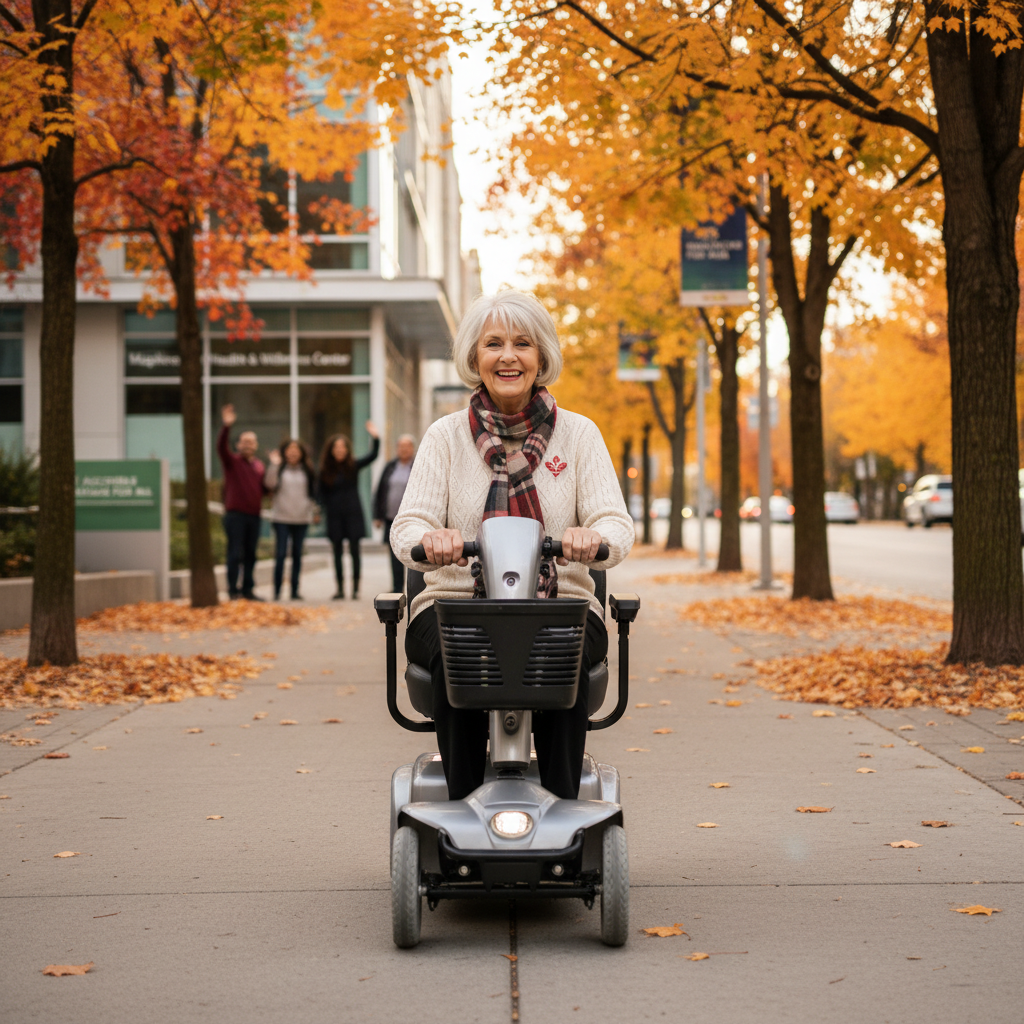
More than 108,550 Canadians rely on a motorized scooter every single day. That number keeps climbing as Canada's senior population grows and more people discover that losing walking ability doesn't mean losing independence. Choosing the right scooter, though, is a different challenge. Models range from $2,995 to over $11,000 CAD. Features vary widely. Funding programs exist, but most people never claim them.
This guide cuts through the confusion. You'll learn exactly what types of motorized scooters are available in Canada, which models deliver real value, how to access provincial funding, and how to pick the model that fits your life, not just the spec sheet.
- Over 108,550 Canadians use motorized scooters daily in a global market worth USD $3.26 billion (Mordor Intelligence, 2025)
- Ontario's ADP covers 75% of approved scooter costs; ODSP recipients may qualify for 100% (ontario.ca)
- Canadian models range from $2,995 to $11,849 CAD; the sweet spot for most seniors is $3,500 to $5,000
- Battery replacement runs $300 to $600 CAD every 2 to 3 years; lithium batteries last longer per dollar
- Most daily routines need 15 to 25 km of range per charge to cover groceries, appointments, and neighbourhood outings
What Is a Motorized Scooter and Who Needs One?
The global mobility scooter market reached USD $2.54 billion in 2026 (Mordor Intelligence, 2025), driven largely by aging populations in North America and Europe who want to stay active and independent without requiring full-time caregiver support. A motorized scooter is a battery-powered personal mobility vehicle controlled by a tiller handlebar, not a joystick. You sit upright, steer the way you'd steer a bicycle, and the electric motor handles the distance.
Motorized scooters are designed for people who can still walk short distances but struggle with longer ones. Common candidates include:
- Seniors with arthritis, chronic joint pain, or reduced stamina who can manage around the house but not a full shopping trip
- People managing cardiovascular or respiratory conditions, where sustained exertion raises health risks
- Anyone recovering from surgery who needs extended mobility support during rehabilitation
- Individuals with MS, Parkinson's disease, or chronic fatigue syndrome that limits energy for walking
The key difference between a motorized scooter and a power wheelchair comes down to the control and the use case. Scooters use a tiller and are optimized for outdoor navigation, open spaces, and longer trips. Power wheelchairs use a joystick and handle tight indoor spaces better. If you spend most of your time maneuvering through narrow hallways or need full-time indoor mobility, a power wheelchair may suit you better. We cover that decision in detail further in this guide.
The Factory Direct Medical Expert Team has been helping Canadians find the right mobility solution since 1996. The single most common regret we hear from customers is waiting too long to get a scooter. Those who transition early maintain grocery independence, attend social events, and keep medical appointments on their own terms.
What Types of Motorized Scooters Are Available in Canada?
Canada's motorized scooter market has expanded into four distinct categories, and choosing the wrong one is one of the most common and costly buyer mistakes. Most Canadian daily routines require 15 to 25 km of range per charge to cover grocery runs, medical appointments, and neighbourhood outings (CareMade, 2026). Start with range and terrain before you look at price.
Travel and Portable Scooters (Folding Models)
Lightweight, disassembling or auto-folding scooters designed for transport in a car trunk or on an airplane. Ideal for snowbirds, frequent travelers, and those who use a scooter for specific outings rather than full-time daily use.
- Weight: 18 to 32 kg; heaviest section typically under 14 kg
- Range: 20 to 35 km per charge
- Price range: $2,995 to $4,200 CAD
- Best for: Seniors who need a scooter for outings but not full-time daily use
3-Wheel Standard Scooters
3-wheel models offer a tighter turning radius, making them easier to navigate in shopping centres, hospital corridors, and indoor spaces. The trade-off is slightly less outdoor stability on uneven terrain compared to 4-wheel models. For a detailed breakdown of this choice, see the 3-wheel vs. 4-wheel mobility scooter comparison guide on the Factory Direct Medical blog.
- Range: 25 to 40 km per charge
- Price range: $3,200 to $4,500 CAD
- Best for: Mixed indoor and outdoor use, frequent shopping or clinic visits
4-Wheel Standard Scooters
Four wheels provide superior stability on outdoor surfaces, including uneven sidewalks, parking lot asphalt, and gentle grass. These are the most popular category for Canadian seniors who use their scooter daily. They're less compact but more confidence-inspiring at speed.
- Range: 30 to 45 km per charge
- Price range: $3,600 to $5,000 CAD
- Best for: Daily outdoor use, varied terrain, users who prioritize stability
Heavy-Duty All-Terrain Scooters
Built for rugged conditions: gravel paths, steep inclines, grass, and rural environments. Higher weight capacities (often 160+ kg), powerful motors, advanced suspension, and reinforced frames define this category. These are serious outdoor mobility vehicles.
- Weight capacity: 160 to 200+ kg
- Range: 40 to 60 km per charge
- Price range: $5,000 to $11,849 CAD
- Best for: Users with higher weight requirements or demanding outdoor environments
Many buyers default to the cheapest portable model available. A $2,995 travel scooter used daily on Canadian sidewalks and in all seasons will wear faster and cost more in repairs than a $4,500 standard model built for exactly that load. Match the category to your actual usage pattern, not your initial price ceiling.
Top Motorized Scooters at Factory Direct Medical
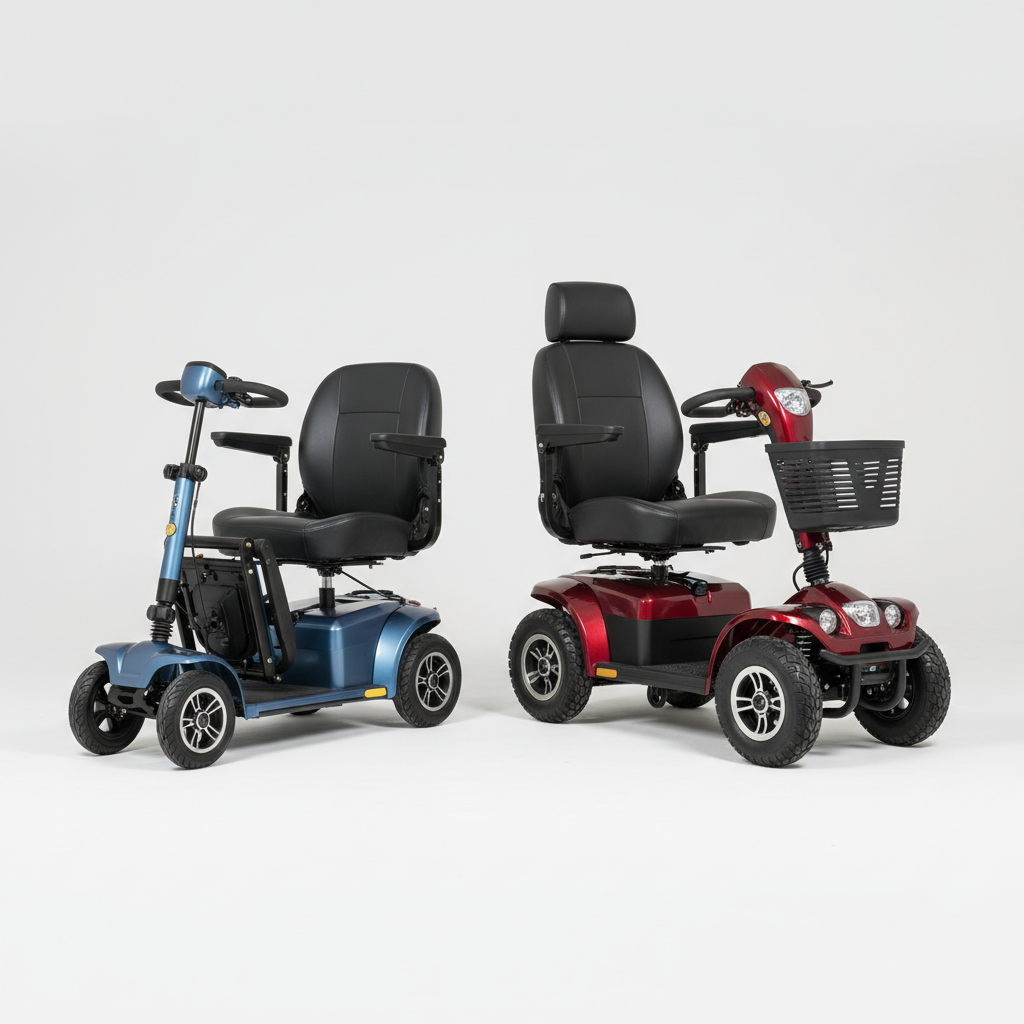
Factory Direct Medical carries 10+ motorized scooter models from $2,995 to $11,849 CAD, with free shipping on most orders. The five models below cover the full range of Canadian buyer needs, from light travel use to heavy-duty all-terrain performance.
EZee Elite Portable
Model: CH4030
- Folding design: disassembles without tools; heaviest section under 14 kg
- Range: Up to 35 km per charge on flat terrain
- Weight capacity: 136 kg
- Wheels: 4-wheel configuration with dual front wheel for stability
- Best for: First-time scooter buyers who want portability at an accessible price
The CH4030 is a reliable entry point. It handles standard Canadian sidewalks and shopping centres without issue, folds quickly for car transport, and comes backed by EZee Life's Canadian service network.
Moving Life ATTO
The ATTO was engineered from the ground up for travelers. It folds to airline carry-on dimensions in under 15 seconds, which makes it the top choice for snowbirds and frequent flyers. The lithium battery qualifies for most commercial airline carry-on policies, removing the hassle of checking your scooter as oversized freight. At roughly 18 kg when folded, it's one of the lightest full-featured motorized scooters available anywhere in Canada.
The trade-off is range. Expect 20 to 25 km per charge on flat urban terrain, which suits most day trips but not all-day excursions. If you need longer daily range, consider the Movo Brome instead.
Movo Brome
| Spec | Detail |
|---|---|
| Motor | 700W dual-motor system |
| Range | 40 km per charge |
| Max speed | 15 km/h |
| Weight capacity | 136 kg |
| Suspension | Front and rear independent |
| Wheels | 4-wheel, all-terrain tires |
The Movo Brome delivers the longest range in the mid-price category. Its 700W motor handles moderate inclines, including the driveway lips and parking lot slopes common in Canadian suburbs. For buyers who use their scooter every day and cover real distances, the 40 km range removes range anxiety entirely.
Matrix Swift S600
- 500W high-performance motor
- IP-rated water and dust protection (withstands rain and wet pavement)
- Reinforced suspension for varied terrain, including light off-road
- Weight capacity: up to 136 kg
- Compact footprint compatible with wider indoor hallways
The S600 earns its place for Canadian buyers because of its IP rating. Rain, spring snowmelt, and wet pavement don't compromise its electronics. This is the scooter for buyers in coastal British Columbia, Atlantic Canada, or anywhere precipitation is part of daily life.
Heartway Monster X S12
Canada's terrain doesn't end at the sidewalk. The Monster X S12 is built for buyers who need serious capability. A 900W motor powers through grass, gravel, and unpaved paths. All-terrain tires grip confidently on uneven surfaces. The reinforced frame supports a weight capacity of over 180 kg. This isn't a travel scooter or a shopping centre model. It's a full daily-use outdoor mobility vehicle for users with demanding physical requirements or access to rural and recreational environments.
For the complete catalog, including 3-wheel models, accessories, and the latest inventory, visit the motorized scooters collection at Factory Direct Medical.
How Much Does a Motorized Scooter Cost in Canada?
Canadian motorized scooters range from $2,995 to $11,849 CAD, but that headline range misleads buyers into thinking any price point delivers comparable value. North America captured 44% of the global mobility scooter market in 2025, generating USD $0.7 billion in revenue (Mordor Intelligence, 2025). Intense competition means more options at every price, but it also means more models that look similar and perform very differently.
Price tiers at a glance:
| Category | Price Range | Typical Use |
|---|---|---|
| Travel/Portable | $2,995 to $4,200 | Occasional outings, travel |
| Standard 3-Wheel | $3,200 to $4,500 | Mixed indoor/outdoor, daily use |
| Standard 4-Wheel | $3,600 to $5,000 | Daily outdoor, varied terrain |
| Heavy-Duty All-Terrain | $5,000 to $11,849 | Rugged outdoor, high weight capacity |
Beyond the sticker price, budget for:
- Battery replacement: Every 2 to 3 years. Lead-acid batteries cost $200 to $400 CAD. Lithium batteries cost $400 to $600 CAD but last longer and hold their charge better in cold Canadian winters.
- Annual servicing: Tire inspection, brake adjustment, and electrical checks run $100 to $300 CAD per year depending on model and service provider.
- Accessories: A weather cover, front basket, and spare charger add $100 to $250 CAD but extend the scooter's lifespan and usability significantly.
The most important cost consideration is how much provincial funding will reduce your out-of-pocket expense. For most Ontario residents, ADP funding transforms a $4,000 scooter into a $1,000 purchase.

What Provincial Funding Programs Cover Motorized Scooters in Canada?
Ontario's Assistive Devices Program covers 75% of the approved cost of a mobility scooter for eligible Ontario residents, and ODSP recipients may qualify for 100% coverage with no out-of-pocket cost (Government of Ontario). Approximately 60% of Ontario mobility scooter customers use ADP funding, which makes it the most impactful financial tool in the Canadian market.
Here's how the major programs break down:
Ontario: Assistive Devices Program (ADP)
The ADP is administered by the Ontario Ministry of Health. To qualify, you need an Ontario health card, a physician's prescription confirming a long-term physical disability (6 months or longer), and purchase through a registered ADP vendor. Factory Direct Medical is a registered ADP vendor.
- ADP covers: 75% of the approved device cost
- ODSP recipients: potentially 100% coverage, zero out of pocket
- Application: completed through your vendor; allow 4 to 8 weeks for approval
Quebec: Mobility Scooter Program (RAMQ)
Quebec residents access funding through the Régie de l'assurance maladie du Québec. For eligible users, there are no fees or deductibles. For those on social assistance, the program covers the remaining portion not funded by RAMQ.
Veterans Affairs Canada
Eligible veterans can access funding for mobility aids through Veterans Affairs Canada. Coverage depends on the individual's disability rating and the specific program stream applicable to their service history.
British Columbia: PharmaCare Equipment and Supplies Benefit
BC residents with registered PharmaCare coverage can access mobility device funding. Eligibility is based on medical need and household income, with the application processed through a registered prescriber.
Private Insurance
Many extended health plans cover mobility devices under a "durable medical equipment" or "assistive devices" category. Check your policy documentation or call your plan administrator. Submit the physician prescription and any provincial authorization together to reduce claims processing delays.
Based on customer interactions at Factory Direct Medical, buyers who apply for ADP funding before completing their purchase save an average of $2,700 CAD on a standard-category scooter. A significant portion of first-time buyers are unaware they qualify until they ask. If you're an Ontario resident with a physician, it is nearly always worth applying before you buy.
The Factory Direct Medical team walks customers through funding program eligibility as part of the purchase process, including completing the required vendor documentation for ADP applications.
Motorized Scooter vs. Electric Wheelchair: Which Should You Choose?
A motorized scooter is the right choice for outdoor independence over longer distances; an electric wheelchair is the better choice for full-time indoor mobility, precise maneuvering, or users with upper-body limitations that make tiller steering difficult or painful. Getting this decision wrong leads to returned equipment, lost deposits, or simply a device that sits unused.
For a deeper look at power wheelchair options and how they compare across models, see the electric wheelchair guide on the Factory Direct Medical blog.
Decision matrix: 5 key factors
| Factor | Motorized Scooter | Electric Wheelchair |
|---|---|---|
| Control method | Tiller handlebar (requires grip) | Joystick (minimal grip needed) |
| Indoor use | Limited (wider turning radius) | Excellent (tight turning radius) |
| Outdoor range | 20 to 60 km per charge | 15 to 30 km typical |
| Portability | Most models fold or disassemble | Fewer folding models; heavier overall |
| Starting price | From $2,995 CAD | From $3,000 CAD |
The decision often comes down to hand strength and primary environment. If you have moderate to severe arthritis in your hands, gripping a tiller for 30+ minutes becomes painful. A joystick on a power wheelchair requires far less grip force. If you primarily navigate around your condo or apartment building with occasional outdoor trips, the tighter turning radius and joystick control of a power wheelchair will make daily life easier.
The honest recommendation: if you can comfortably grip and turn a bicycle handlebar for 20 or more minutes, a motorized scooter will serve you better at a lower price point for outdoor use. If gripping is a challenge, consult an occupational therapist before purchasing either type.
How to Choose the Right Motorized Scooter in Canada
Start with three questions before you look at a single model: Where will you use this scooter most? Who will be lifting or transporting it? What is your weight and daily distance requirement? Those three answers will narrow the field from 10+ models to 2 or 3 real candidates.
5-step selection checklist:
- Define your terrain. Flat urban sidewalks and shopping centres allow lighter, standard models. Gravel, grass, steep ramps, or rural paths require heavy-duty suspension and a 500W or larger motor.
- Calculate your range. A round trip to a grocery store 8 km away requires at least 16 km of range. Add 25% buffer for hills, headwinds, and battery age. Most active users need 25 to 35 km; demanding users need 40 km or more.
- Check weight capacity. Manufacturer ratings cover the rider only. Add 5 to 10 kg for bags, a basket, and accessories when selecting your model. Always choose a model rated at least 10% above your body weight.
- Evaluate portability. If someone else will lift sections into a vehicle, look for models where the heaviest section weighs under 14 kg. If the scooter stays at home or travels only by vehicle ramp, portability matters less.
- Confirm funding eligibility before buying. Some models appear on provincial ADP-approved lists; others don't. Buying before your funding is confirmed can create delays or require a costly exchange.
For a comprehensive walkthrough of the full purchase process, including ADP applications, trial periods, and warranty considerations, the complete medical scooters buying guide on the Factory Direct Medical blog covers every step in detail.
Frequently Asked Questions
Is a motorized scooter covered by OHIP in Ontario?
OHIP does not cover motorized scooters, but Ontario's Assistive Devices Program does. The ADP covers 75% of the approved purchase cost for eligible Ontario residents with a valid health card and a physician prescription confirming a long-term physical disability. ODSP recipients may qualify for 100% coverage with zero out-of-pocket cost (ontario.ca).
How fast do motorized scooters go in Canada?
Most motorized scooters travel between 6 and 15 km/h. Canadian provinces generally classify personal mobility scooters as assistive devices rather than motor vehicles, so no driver's license is required. Speed limits are set to keep users and pedestrians safe on sidewalks, shopping areas, and shared paths.
Can I take a motorized scooter on public transit in Canada?
Most major Canadian transit systems, including the TTC (Toronto), TransLink (Vancouver), and OC Transpo (Ottawa), permit mobility scooters on accessible vehicles and routes. Space is often limited and subject to availability at boarding time. Call your local transit authority before your trip to confirm accessible platform access and vehicle capacity.
How long does a motorized scooter battery last?
With regular use, lead-acid batteries last 1 to 2 years and cost $200 to $400 CAD to replace. Lithium batteries last 2 to 3 years and cost $400 to $600 CAD. Storing the scooter indoors and keeping the battery at 50% or above when not in use extends battery life significantly, which matters in Canadian winters when many scooters are stored for 3 to 4 months.
Do I need a prescription to buy a motorized scooter in Canada?
No prescription is required to purchase a motorized scooter outright. However, to access Ontario ADP funding or similar provincial programs, your physician must complete a prescription form confirming your mobility disability and recommending the specific device. The prescription is required for the funding application, not for the purchase itself.
What is the lightest motorized scooter available at Factory Direct Medical?
The Moving Life ATTO weighs approximately 18 kg when folded, making it the lightest full-featured model in the Factory Direct Medical catalog. The Matrix Lite, at approximately 28 kg, auto-folds via remote control and offers a better range-to-portability ratio for users who want simpler loading without going to the absolute minimum weight.
Conclusion: Finding the Right Motorized Scooter in Canada
Motorized scooters restore independence. Over 108,550 Canadians use one every day, and with Ontario's ADP covering 75% of approved costs, the financial barrier is lower than most people expect. The right model depends on three things: your terrain, your daily range requirement, and who will transport the device. Don't let the variety of options delay a decision that could improve your quality of life today.
Factory Direct Medical has carried Canada's leading mobility scooter brands since 1996. Our team knows these products through real-world customer use, not just spec comparisons.
Browse the full selection and reach out for a no-pressure needs assessment:
Explore Canada's full range of motorized scooters with free shipping on most orders.
Shop All Motorized Scooters at Factory Direct Medical


