


How Lift Chairs Help Seniors Stay Independent at Home
By Factory Direct Medical Expert Team | April 26, 2026
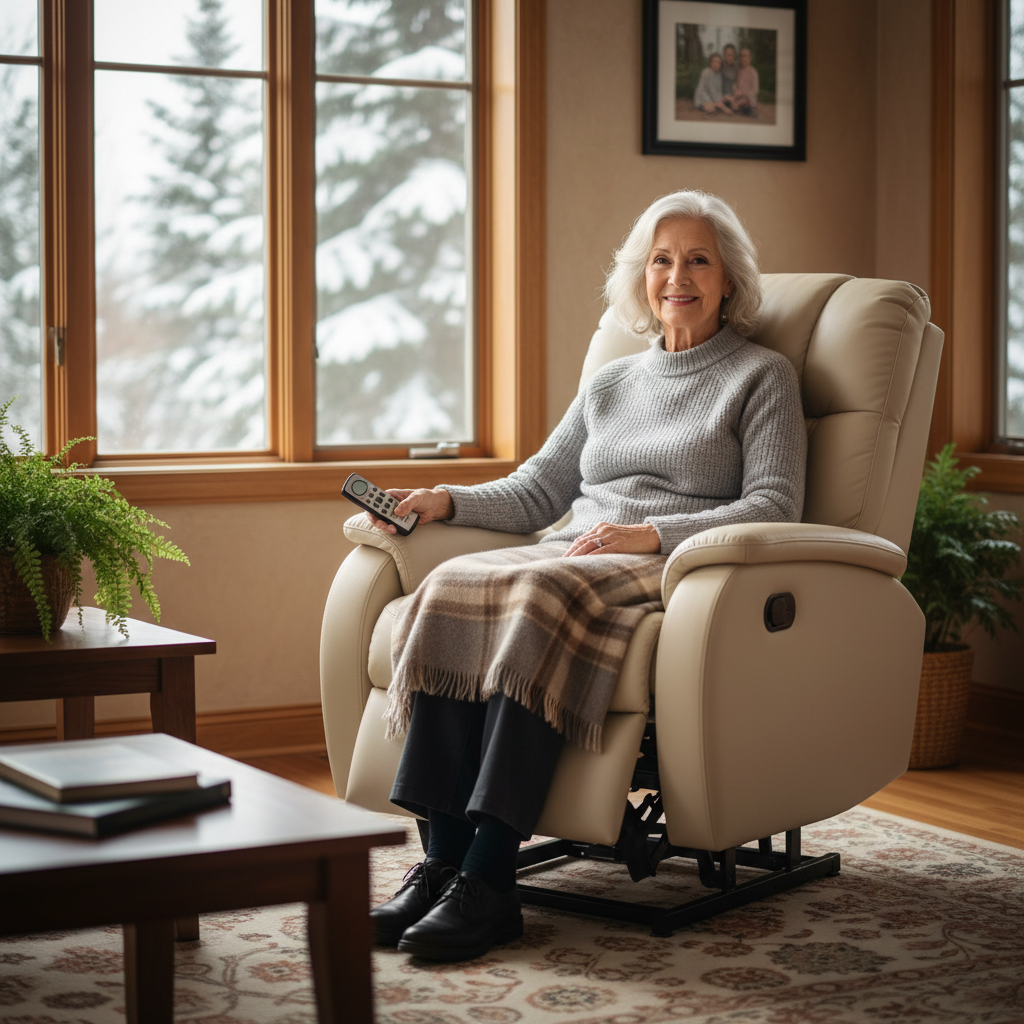
Every year, 1 in 3 Canadians aged 65 or older experiences a fall, and rising from a low chair is one of the most common moments when balance gives way. For the 8.1 million Canadians now aged 65 or older, a power lift chair isn't a luxury — it's a practical safety tool that restores confidence and reduces daily injury risk.
This guide explains how lift chairs work, which health conditions benefit most, and how to match chair features to your specific needs. You'll also find real product options available today with free shipping across Canada from Factory Direct Medical, trusted since 1996.
What Is a Lift Chair and How Does It Work?
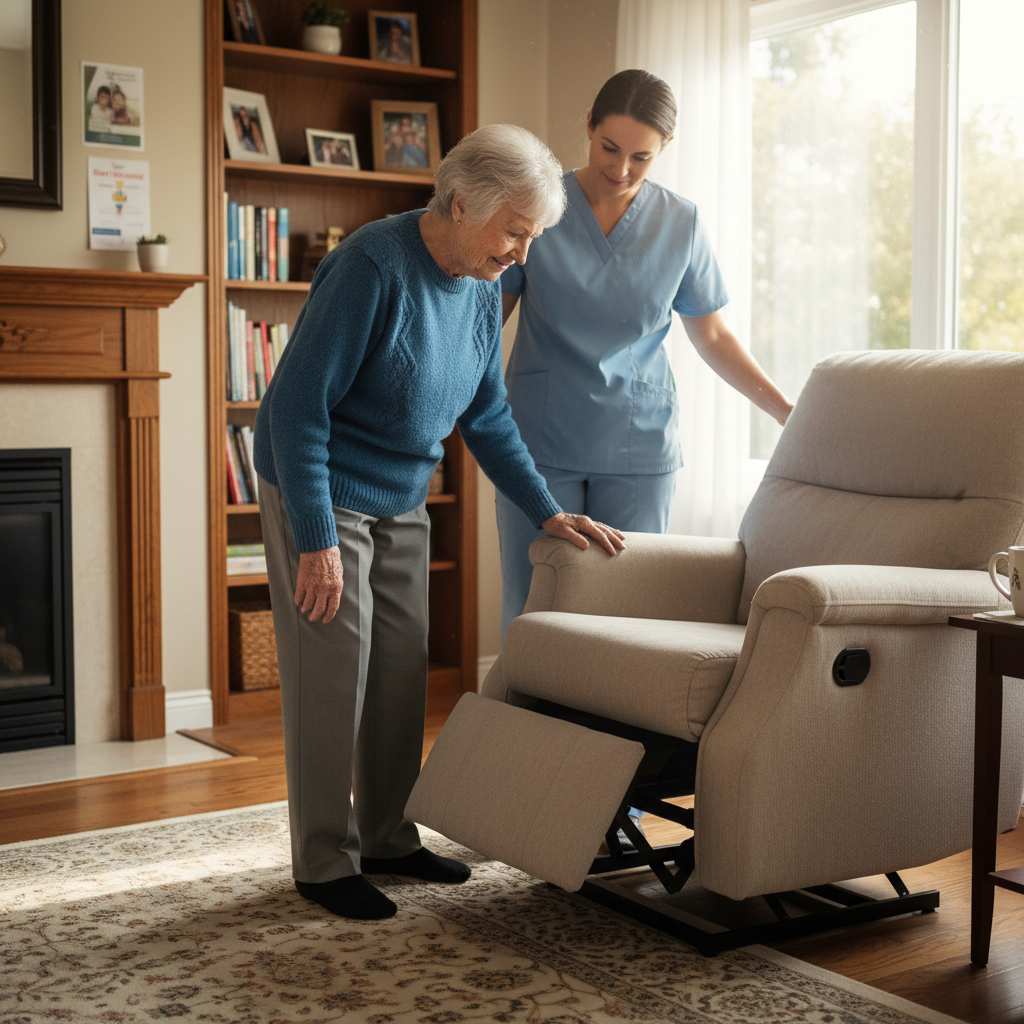
A power lift chair uses an electric motor to tilt the entire seat platform forward and upward, raising the user to a near-standing position without requiring them to push off armrests or engage weakened leg muscles. In 2023/24, 81,599 fall-related hospitalizations were recorded across Canada, many linked to this exact transition moment.
The mechanism is straightforward. A hand-held remote activates one or two motors. Single-motor models raise the footrest and recline the back together as one unit. Dual-motor models control the footrest and backrest independently, allowing the user to find precise therapeutic angles.
Here's what happens when you press the lift button:
- The chair's base frame tilts forward at roughly 12-15 degrees.
- The seat rises simultaneously, reaching a height where the user can step off with minimal leg effort.
- The movement is slow, steady, and fully controllable — the user can stop at any point.
Most lift chairs also recline fully in the opposite direction, functioning as a recliner for rest or sleep. This dual function means the chair earns its place in a living room not just as a medical device, but as everyday comfortable furniture.
Who Benefits Most from a Lift Chair?
Lift chairs are most commonly recommended for people with arthritis, post-hip or post-knee surgical recovery, Parkinson's disease, COPD, and general age-related muscle weakness. Arthritis affects 6 million Canadians, making it the single largest driver of lift chair adoption in this country — the powered rise removes the joint-loading push-off that causes pain and instability on every sit-to-stand transition.
Arthritis and Joint Conditions
Rising from a chair normally requires the knees and hips to absorb significant compressive load. For someone with osteoarthritis or rheumatoid arthritis, that moment can be intensely painful. A lift chair eliminates the push phase entirely, making 20 or 30 daily transitions manageable rather than dreaded.
Post-Surgical Recovery
After hip or knee replacement, surgeons typically restrict hip flexion to under 90 degrees for 6-12 weeks. Standard low chairs force the hip past that angle. A lift chair with an adjustable seat height keeps the user in a safe position and removes the risk of dislocation during rising.
Neurological Conditions
Parkinson's disease reduces automatic postural adjustments. Users often "freeze" mid-rise. The gradual, motorized lift provides a predictable, external assist that works with the body's timing rather than demanding it. Multiple sclerosis patients benefit similarly, particularly during fatigue episodes when voluntary muscle strength is reduced.
Cardiac and Respiratory Conditions
Congestive heart failure is the most common diagnosed condition in Canadians over 65, with 550,000 new cases diagnosed annually. Infinite-position lift chairs can achieve a zero-gravity position (feet elevated slightly above heart level), which reduces cardiac preload and eases breathing. For COPD patients who cannot lie flat due to orthopnea, a semi-reclined position in a lift chair can replace a hospital bed for daytime rest.
Lift Chair Types Explained: Which Position Is Right for You?
Two-position lift chairs recline to roughly 45 degrees (ideal for reading or television), while three-position models go nearly flat, and infinite-position dual-motor chairs allow fully independent footrest and backrest control, including zero-gravity and Trendelenburg angles. The right type depends on how much time you'll spend in the chair and your specific health requirements.
Two-Position
The back reclines to roughly 45 degrees. The footrest rises simultaneously (single motor). This type suits users who want a comfortable TV chair with lift assist but don't need to sleep or fully recline. It's the most affordable entry point, typically under $1,200 CAD.
Three-Position
The back goes nearly flat (around 160 degrees). Still single-motor, so the footrest and back move together. Sleeping is possible, though the angle is slightly inclined rather than fully flat. Good for users who want occasional daytime napping but aren't managing a cardiac or respiratory condition requiring precise positioning.
Infinite Position (Dual Motor)
The footrest and backrest move independently. The chair can achieve full flat, zero-gravity (feet above heart), or Trendelenburg positioning (feet elevated above head). This is the clinical standard for users managing CHF, COPD, post-surgical recovery, or edema. It's the type recommended by most occupational therapists. Factory Direct Medical's lift chair collection carries multiple infinite-position models starting at $1,012.99 CAD.
Key Features to Look for When Buying a Lift Chair
Weight capacity, seat dimensions, motor quality, and fabric are the four variables most predictive of long-term satisfaction — and they matter more than optional add-ons like massage. Standard lift chairs begin at a 325 lb weight capacity, with heavy-duty models accommodating up to 700 lbs.
Sizing First
Measure four points before ordering:
- Seat height: From floor to the back of the knee when seated. Should match the chair's seat height at rest.
- Seat depth: From the back of the knee to the tailbone. A seat too deep pushes the user forward.
- Seat width: Hip measurement at the widest point, plus 2-3 inches for comfort.
- Total height: Floor to top of head when seated, ensuring proper headrest support.
Getting these right prevents the common problem of a user perching at the front edge or slouching into a seat that's too deep.
Motor and Frame Quality
OKIN and Dewert motors (used in Ezee Life models) are widely considered industry standards for durability. Look for motors rated to at least 350 lbs of dynamic load. A steel-reinforced frame is non-negotiable for bariatric or tall users.
Comfort and Therapeutic Add-Ons
Heat and massage (available on models like the Mercury and CH4108) reduce muscle tension and are particularly valued by arthritis and fibromyalgia users. USB charging ports allow users to keep phones or tablets accessible without bending. Power headrests (available on CH4108/CH4109) let users reposition their neck independently, which is useful for those with cervical spine conditions.
Battery Backup
A battery backup system allows the chair to operate during power outages. This feature is important for users who sleep in the chair or who have limited ability to exit without powered assist.
Lift Chairs for Specific Health Conditions
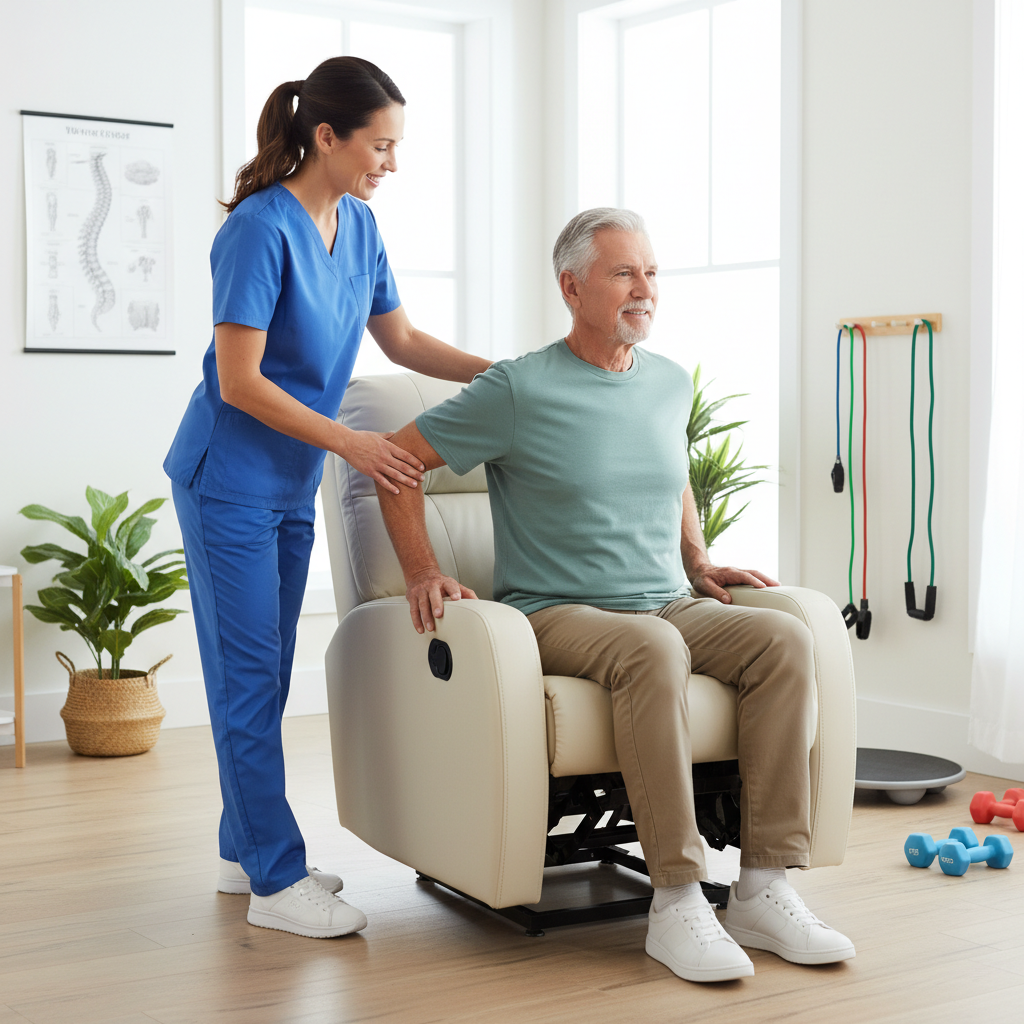
Physical therapists and occupational therapists consistently recommend zero-gravity infinite-position lift chairs for post-operative patients because they reduce joint pressure by distributing body weight across the entire back surface rather than concentrating load at the hips. The evidence base for positioning interventions in chronic disease management is well-established.
Post-Hip or Knee Replacement: Choose an infinite-position chair with a seat height that keeps the hip at or above 90 degrees when seated. The powered rise means the user never has to push off, eliminating the torque that risks early prosthetic dislocation.
COPD and Breathing Difficulty: A semi-reclined position (roughly 120-135 degrees) reduces diaphragm compression and eases breathing. Infinite-position chairs let the user find this angle precisely. Avoid two-position chairs, which can't achieve this intermediate angle.
Congestive Heart Failure and Edema: The zero-gravity or Trendelenburg position (feet above heart level) assists venous return and reduces lower-limb swelling. The CRA's own guidance on lift chairs recognizes the therapeutic purpose of the lifting mechanism, which is why a physician prescription unlocks GST/HST exemption.
Parkinson's Disease: Prioritize a large, single-button remote with clear labelling. The lift assist removes the need for precise voluntary motor control during rising. A higher seat height reduces the distance the chair must travel, shortening the transition and reducing freeze episodes.
Funding, Insurance, and Tax Considerations in Canada
The Canada Revenue Agency has published specific guidance confirming that lift chairs with a qualifying lift mechanism are zero-rated for GST/HST when prescribed in writing by a physician (CRA GI-133, 2025). This means eligible buyers pay no sales tax on the purchase price, a saving of 5-15% depending on province.
To qualify:
- The chair must include a lift mechanism that assists the user from seated to standing
- A written prescription signed by a licensed physician or nurse practitioner must be presented at purchase
- The prescription must include the patient's name and the professional's registration number
Medical Expense Tax Credit (METC)
Canadians who pay out-of-pocket for a lift chair may claim the cost under the METC on their federal tax return. The 2025 threshold is 3% of net income or $2,835, whichever is less. Amounts above that threshold receive a 15% federal credit. Provincial credits stack on top, increasing the effective return.
Private Insurance and Extended Benefits
Many private health plans cover assistive devices partially when prescribed by a physician. Coverage ranges widely (20-80% of cost) and often requires pre-authorization. Contact your benefits provider before purchasing and ask specifically about "powered lift chairs" or "assistive seating devices."
For a complete breakdown of all available funding programs, see Factory Direct Medical's Lift Chair Funding Guide.
Top Lift Chairs Available at Factory Direct Medical
Factory Direct Medical carries 12+ lift chair models from Ezee Life and Elran, ranging from $1,012.99 to $5,000 CAD, with free shipping across Canada. Here are four models matched to different needs and budgets.
Ezee Life Venus CH4010 — Best Entry-Level Infinite Position
The Venus is the starting point for users who want full infinite-position capability without committing to a premium budget. At $1,012.99 CAD, it delivers dual-motor independent backrest/footrest control in blue, brown, or grey fabric. The Venus suits users who primarily need the lift assist and an occasional zero-gravity recline, without heat, massage, or USB features. It's the choice our mobility team recommends most often to caregivers managing a tight budget alongside a genuine therapeutic need.
Ezee Life Jupiter CH4002 — Mid-Range All-Rounder
- Price: $1,185 CAD
- Motor: Dual (infinite position)
- Colors: Blue, Gray, Brown, Dark Brown
- Best for: Arthritis, general mobility limitations, everyday use
- Weight capacity: 325 lbs
- Highlights: Independent footrest and backrest control; well-tested OKIN motor; four colour options to match existing furniture; strong value for infinite-position capability at this price point
Ezee Life Mercury CH4006 — Heat, Massage & Leather
| Feature | Mercury CH4006 |
|---|---|
| Price | $2,999.99 CAD |
| Motor | Dual (infinite position) |
| Material | Bonded leather |
| Heat zones | Yes (back and seat) |
| Massage | Yes |
| Colors | Black, Brown, Bone |
| Best for | Arthritis, fibromyalgia, chronic back pain |
The Mercury adds therapeutic heat and massage to the infinite-position platform. These functions meaningfully reduce muscle stiffness for arthritis and fibromyalgia users. The leather surface is easy to clean, important for users managing incontinence or post-surgical drainage.
Ezee Life CH4108 — Premium 5-Motor with Full Therapeutic Suite
For users with complex positioning needs, the CH4108 at $2,419.99 CAD provides five independent motor zones: back, footrest, power headrest, lumbar support, and lift. The addition of a power headrest makes this the preferred choice for cervical spine conditions or users recovering from neck surgery. USB charging is built in. This model reflects what the term "therapeutic seating" actually means in a clinical context: full body positioning on the user's terms.
Frequently Asked Questions
Conclusion
A power lift chair addresses one of the most predictable daily fall risks for older Canadians, the sit-to-stand transition, by removing the physical demand entirely. For the 6 million Canadians managing arthritis, the hundreds of thousands recovering from joint surgery, and the growing number living with cardiac and respiratory conditions, the right lift chair isn't a comfort upgrade. It's a practical tool for staying home safely.
Key takeaways:
- Match the chair type (2-position, 3-position, infinite) to the health condition, not the price
- Correct sizing matters more than optional features
- GST/HST exemption with a physician prescription can reduce the purchase price by 5-15%
- Infinite-position dual-motor models offer the widest therapeutic range and are appropriate for most clinical needs
Browse the full lift chair collection at Factory Direct Medical, with free shipping across Canada and expert support from a team trusted since 1996. For help understanding your funding options, see the Lift Chair Funding Guide or contact us directly. We're here to help you find the right fit.


